October 7th, 2026: We need a replacement (donor) for the Philips NMS1436 MSX 9-pins dot-matrix printer printer(head).
We are looking for a replacement printer head and tractor feed. If you have a suitable (NMS1436 or NMS1431, spare replacement or donor that you would like to donate to keep this printer operational, please feel free to let us know using the contact form.
The Philips NMS1436 is an 80-column, 9-pin dot-matrix printer designed for the MSX home computer range in the mid-1980s. It supports draft and letter-quality printing and features compatibility with Epson and IBM printer emulation modes, making it suitable for a wide range of software applications. The printer uses continuous tractor-feed paper and can print text, graphics, and reports at relatively high speed for its era. It was marketed as an affordable and versatile printer for home, educational, and small business use. Today, the NMS1436 is mainly of interest to retro-computing enthusiasts and collectors, particularly within the MSX community.
The NMS1436 represents a period when printers were expected to work with many different computer platforms and software packages. Its emphasis on compatibility and durability helped establish it as one of the more capable printers available to MSX users. Today it is a sought-after peripheral in the European MSX collecting community and an excellent example of Philips’ commitment to the MSX standard. Interesting fact: The NMS1436 is essentially an enhanced version of the Philips NMS1431, with additional Epson, IBM, and Prestel emulation support, making it one of the most software-compatible Philips printers of the MSX era.
Key Features
- 80-column 9-pin dot-matrix technology
- Draft and letter-quality printing
- Epson and IBM emulation compatibility
- Continuous tractor-feed paper support
- Graphics and text printing capabilities
- Designed for Philips MSX computer systems
The printer connected and powered on:
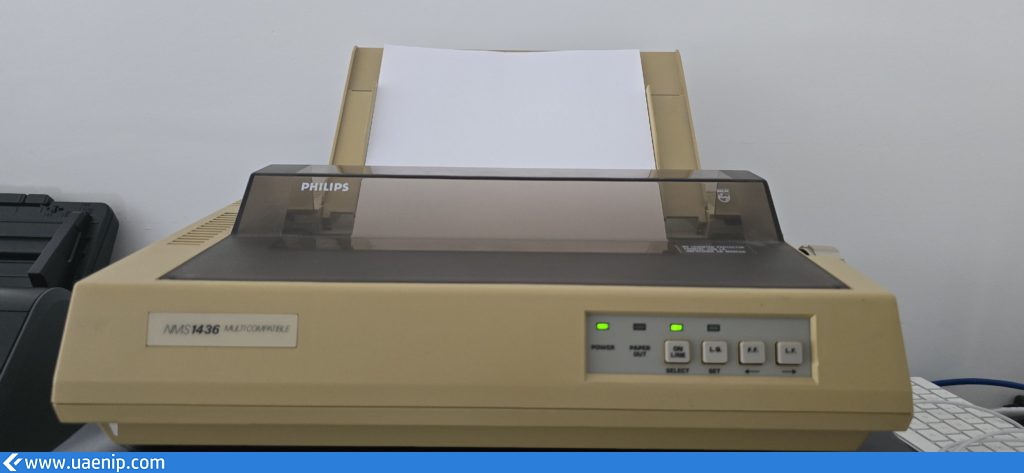
The printer still standing strong and working on its self-test in 2026:
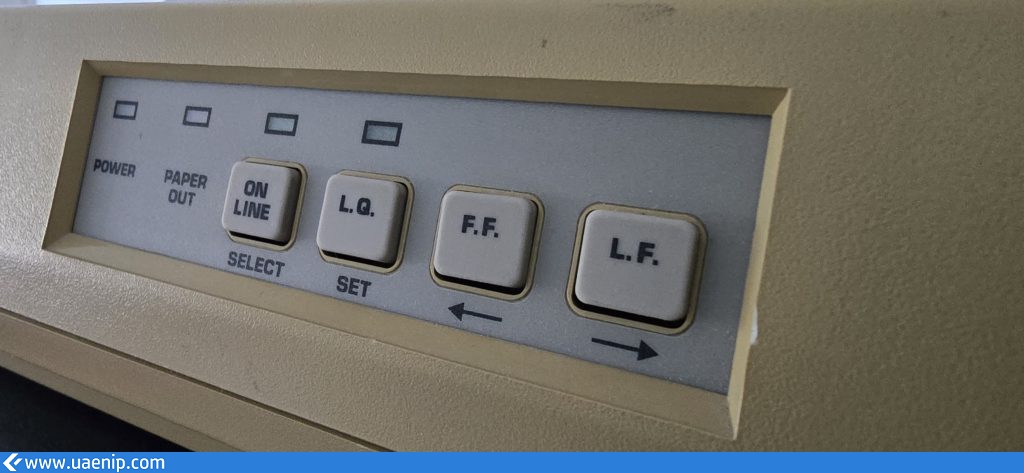
Some of the printer details:
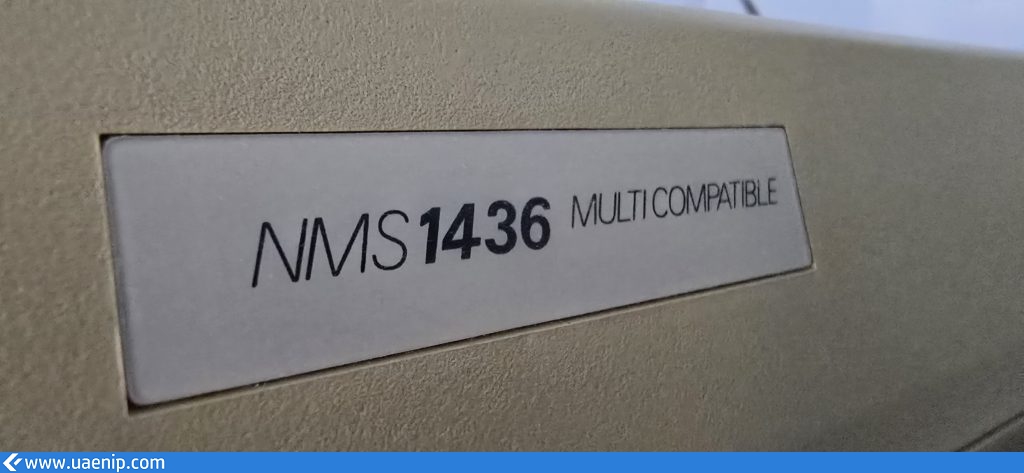
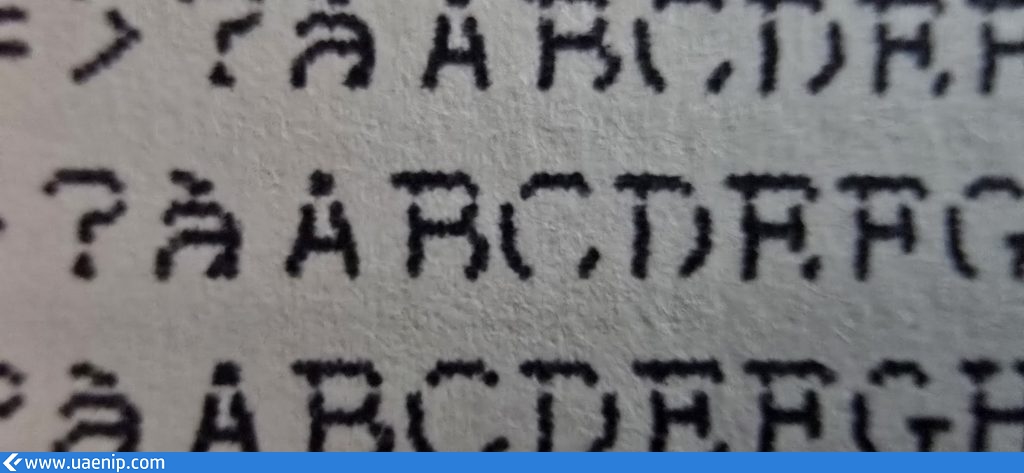
The printer works but the results are not optimal, even though the printer head was cleaned with Isopropanol 99.9% for several hours:
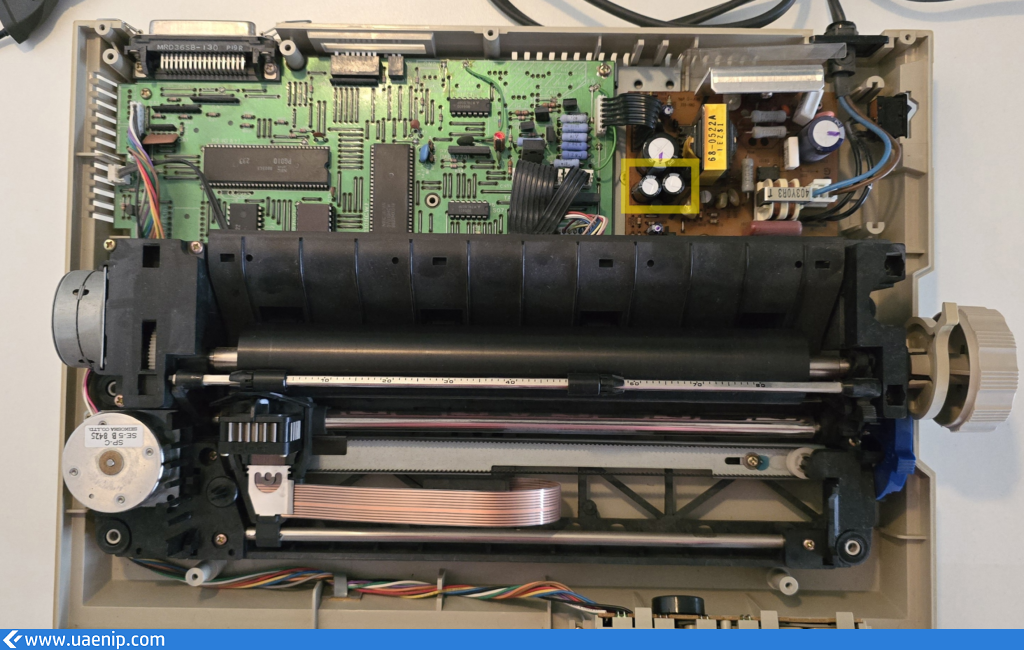
In Q1 2026 some of the components on the powerboard have been replaced (marked in yellow below).
Electrolytic capacitors contain a liquid electrolyte that gradually dries out over time. After approximately 35 years, their capacitance often decreases while their internal resistance (ESR) increases. This can lead to unstable power supplies, startup problems, excessive electrical noise, overheating, and, in some cases, leakage of corrosive electrolyte.
For vintage equipment such as the Philips NMS1436 printer, replacing aging electrolytic capacitors is a sensible preventive maintenance measure. It improves reliability, helps prevent damage to other components, and restores proper operation to the original design specifications.
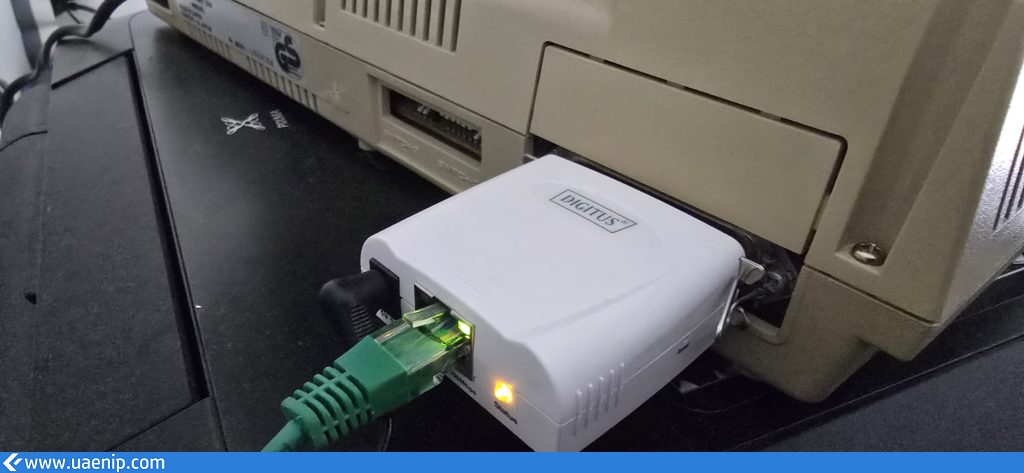
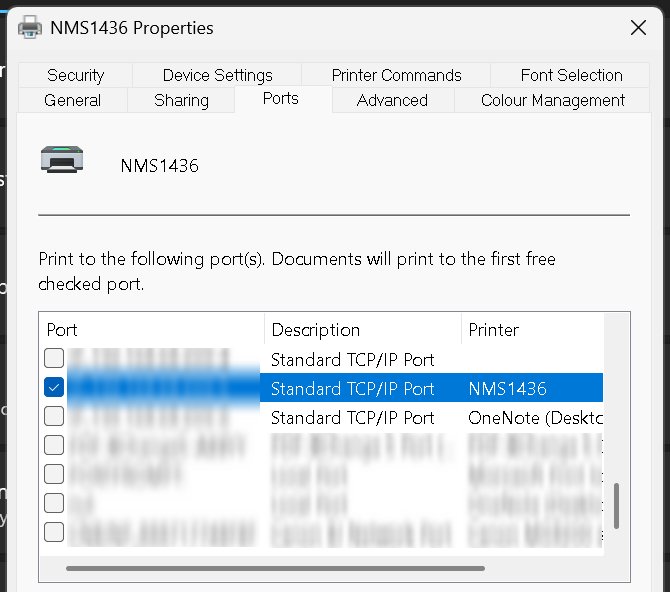
The NMS1436 printer is connected to the local network using a print server.
The Philips NMS1436 was designed in the 1980s for DOS-era software that sent printer control codes and text directly to the printer. Modern Windows applications rely on printer drivers, graphical page descriptions, and USB-based printing systems that the NMS1436 does not support.
As a result, Windows programs often cannot communicate directly with the printer, or features such as fonts, graphics, page formatting, and print preview may not work correctly. To use the NMS1436 with modern systems, a compatible printer driver, an Epson-emulation driver, or a dedicated print spooler/converter is usually required. The NMS1436 supports Epson emulation, but it predates the Windows printing architecture used by today’s applications.>/p>