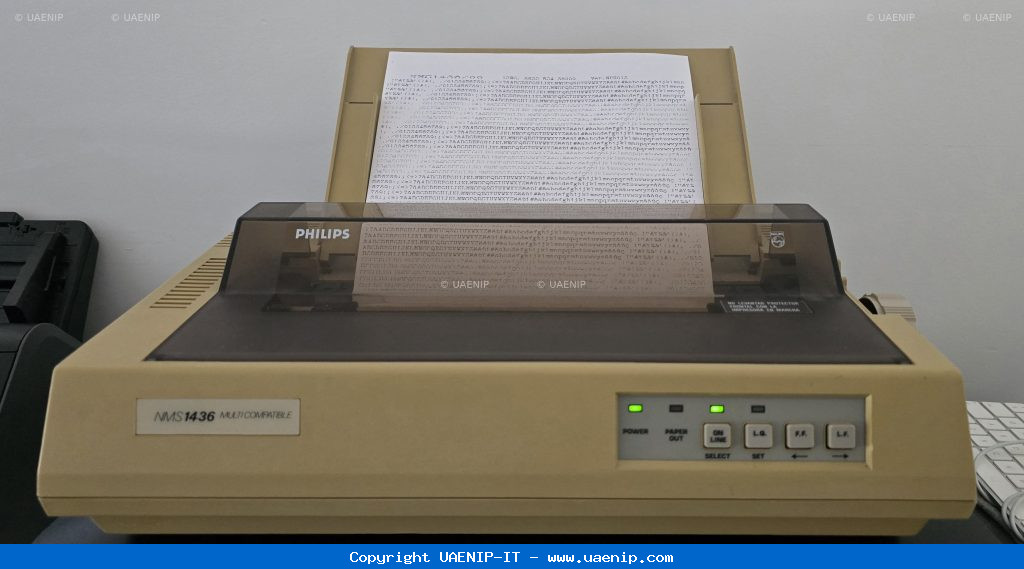
We are currently restoring a Philips NMS1436 printer and are looking for replacement parts or a donor printer.
Parts of interest include:
- Print head
- Tractor-feed
- Carriage assembly
- Mainboard or electronic components
- Power supply parts
- Mechanical components
- Original accessories and documentation
Non-working or incomplete printers are welcome, as they may provide valuable spare parts for restoration. If you have a Philips NMS1436, NMS1431, or compatible donor printer available, please get in touch. Any leads or information would be greatly appreciated. Thank you for helping preserve this classic piece of MSX computing history.
Philips NMS1436 9-pin dot-matrix printer
The NMS1436 is an 80-column, 9-pin dot-matrix printer from the mid-1980s, designed primarily for Philips MSX computers. It was a versatile printer for home, educational, and small business use, offering both fast draft printing and higher-quality letter printing. Thanks to its Epson and IBM compatibility modes, it could work with a wide range of software. Built with a robust mechanical design, many units remain operational today.
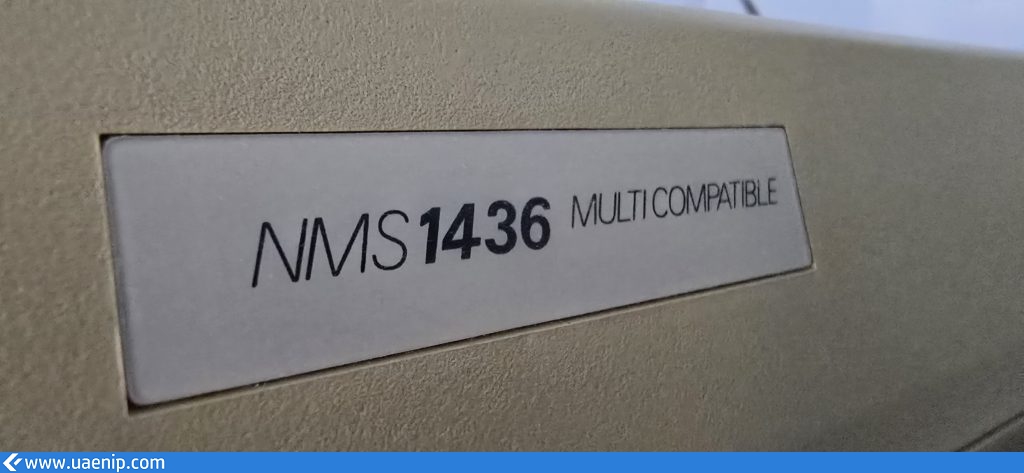
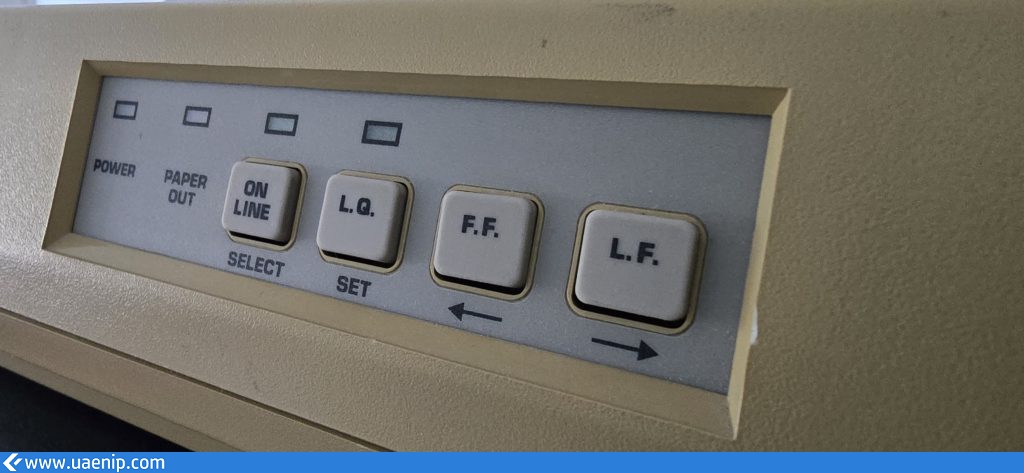
One of the most interesting features of the NMS1436 is its support for multiple printer emulations. The printer was advertised as being compatible with Epson, IBM, and Prestel printer command sets. This significantly increased software compatibility and made the printer useful beyond the MSX world. Many programs written for Epson-compatible printers could print successfully on the NMS1436 without modification.
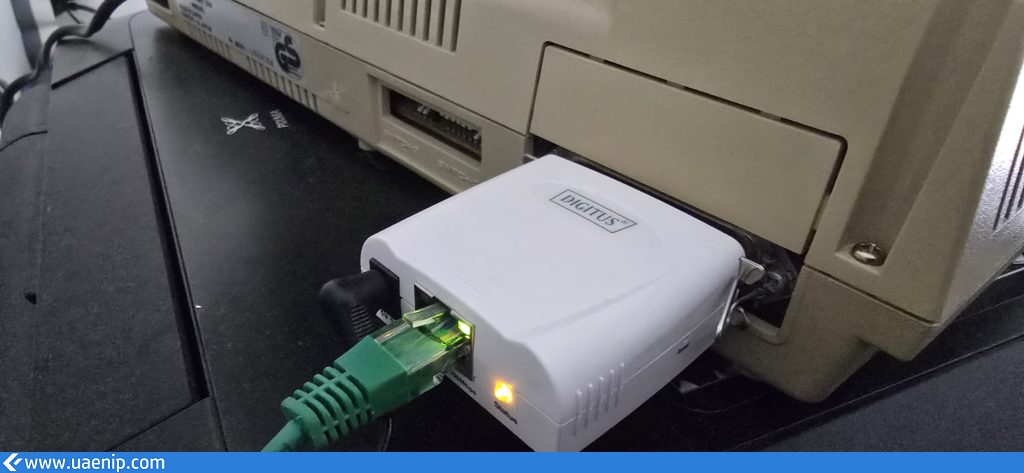
Our Philips NMS1436 printer is connected to a modern Ethernet network using its original Centronics parallel interface and a Digitus print server. The print server acts as a bridge between the printer’s legacy parallel interface and the TCP/IP network, allowing the printer to be accessed from computers on the local network.
By using the Digitus print server, the NMS1436 can be shared over LAN without requiring a direct parallel port connection. This setup combines vintage printing hardware with modern networking technology, making it possible to print from contemporary systems while preserving the printer’s original hardware.
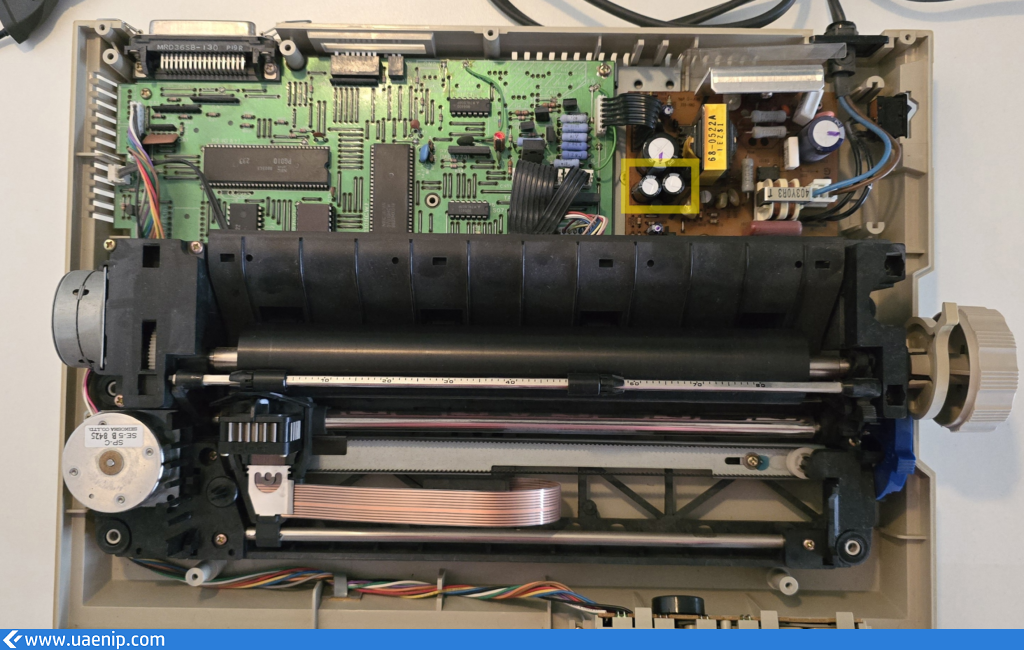
Like many printers of the 1980s, the NMS1436 was built around a robust metal chassis, discrete electronics, and a repairable design. Many units are still operational today after more than 35 years. In Q1 2026 some of the electrolytic capacitors have been replaced.
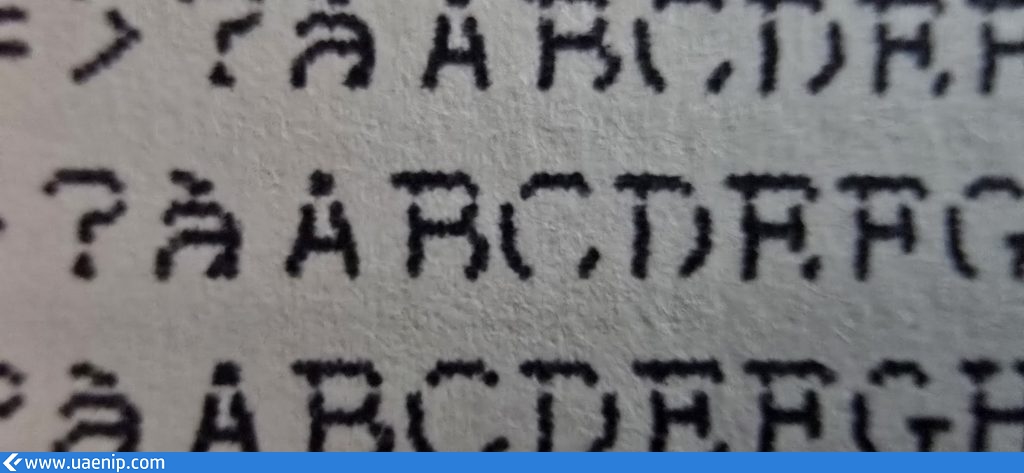
This print sample shows that the printer is functioning, but the output is not producing clean, fully formed characters. Several characters have missing dots, uneven vertical strokes, and inconsistent density. The print head was already cleaned with isopropyl alcohol 99% for several hours and print ribbon has been replaced.